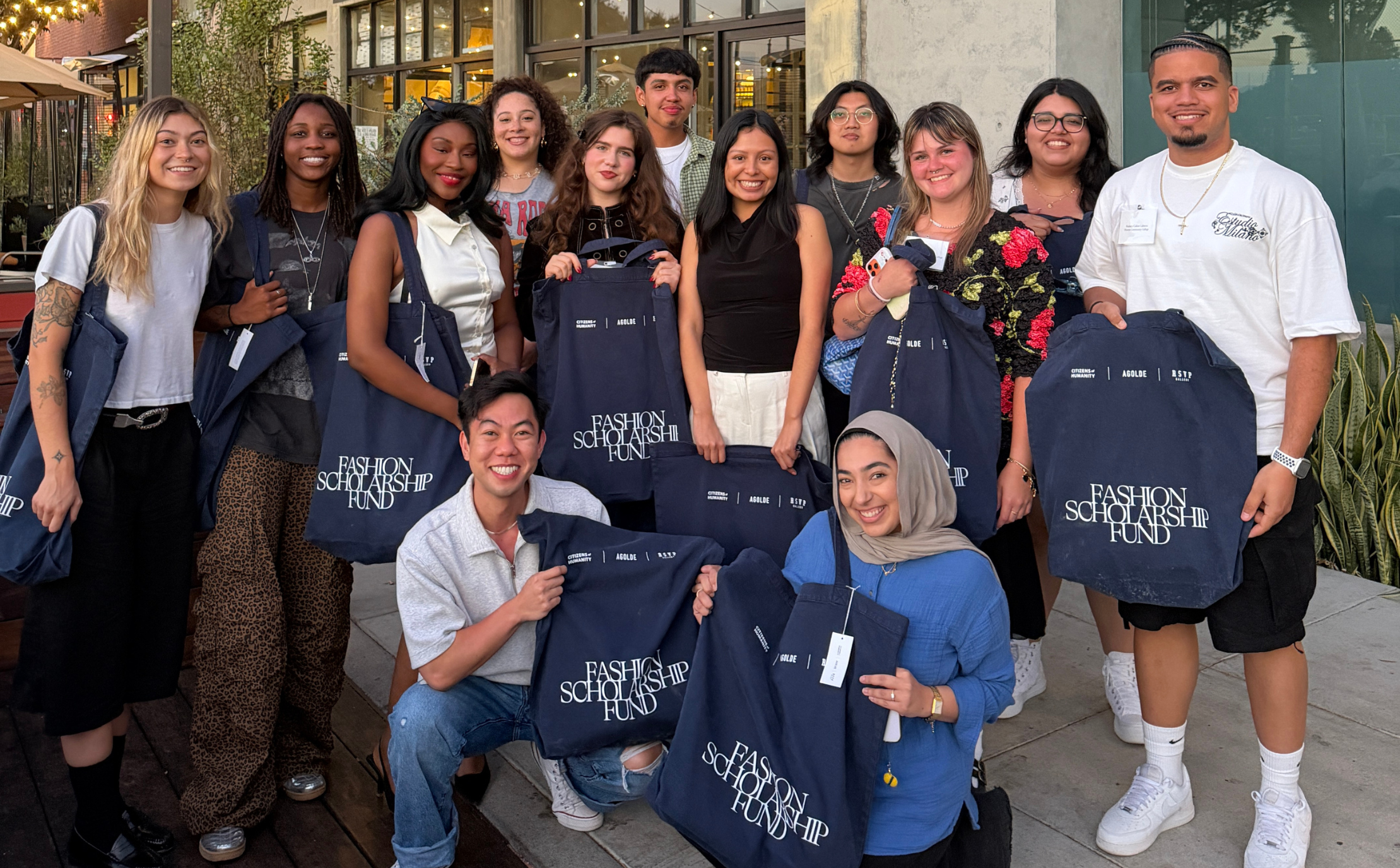

The Fashion Scholarship Fund Case Study Competition is an important project that can feel intimidating at first — a blank page, a big prompt, and the pressure to prove your big thinking. But for Scholars who’ve been through it, the process is less about perfection and more about clarity, curiosity, and commitment to the process.
As of February 2, the Case Study Competition application portal is officially open. Students planning to apply should start by reviewing the How to Apply Guide and next-step requirements here.
The annual competition invites full-time undergraduate students to solve an industry-focused challenge in one of FSF’s study disciplines: Business Strategy, Design and Product Development, Marketing, or Merchandising. The 2027 prompt challenges applicants to explore how a fashion brand or retailer can unlock hidden potential and build a connection with a specific high-value consumer group. Applicants select a discipline, respond to the published prompt, and develop a written and visual case study that demonstrates research, creativity, and actionable insight.
To enter, students must be enrolled full-time at a four-year U.S. college or university and entering the 2026/2027 school year as incoming sophomores, juniors, or seniors. To apply, students must be graduating no earlier than Spring 2027. International students with F-1 visas may participate if they meet eligibility requirements and submit any required training documentation by the deadline.
Across disciplines and years, FSF Scholars describe the case study as a training ground — rewarding preparation, openness, and a willingness to trust your own ideas. Here’s how FSF Scholars recommend approaching the process — and what actually makes a case study stand out.
1. RESEARCH, RESEARCH, RESEARCH
Shape stronger ideas and more credible recommendations.
2024 and 2025 FSF Scholars and Virgil Abloh™ “Post-Modern” Scholars, Lauryn Giddings and DaNae Harrison, both credit early, consistent research strategies for helping them define and refine case study ideas.
2. ACCEPT FEEDBACK TO STRENGTHEN YOUR CASE STUDY
Progress happens through iteration.
2025 FSF Scholar Kinnera Challapalli emphasizes the value of critique as a tool for improving both the work and confidence in it.
“Don’t be afraid to be called out for something because that’s what’s going to make your case study even better and make you feel even more confident about it.”
Feedback sharpens thinking and strengthens the final submission. It also reflects how creative work develops in professional environments.
3. START EARLY SO YOUR IDEAS CAN EVOLVE
Time creates space for stronger outcomes.
2025 FSF Scholar Carter Hinds points to early momentum as a defining factor in successful case studies.
“The strongest piece of advice I could give to a Scholarship Applicant is definitely to start early. The clock ticks down much quicker than expected, and you don’t want to be rushing at the last moment.”
Starting early allows ideas to develop, research to deepen, and revisions to feel intentional.
4. USE FSF UNIVERSITY TO STRUCTURE YOUR PROCESS
Support is built into the program.
FSF University is a free online learning platform for FSF applicants to begin their fashion journey. The course provides resources to support case study development and the journey towards the FSF scholarship, while also introducing important insights about the fashion industry and potential career pathways. It is self-paced and asynchronous, with pre-recorded videos from industry leaders sharing their expertise, as well as additional resources such as module checklists, self-paced assignments, and live office hours with FSF University educators for students who would like to dive deeper.
Carter also highlights it as a key resource for pacing work and receiving feedback throughout the application period.
“FSF University is a great resource. I supported a lot of my classmates this year, working on their case studies, and they all found the way they were able to get feedback and pace out the entire case study incredibly helpful.”
Structure reduces overwhelm and keeps progress consistent.
FSF University will launch in the Spring. Check back here for more information.
5. PLAN YOUR TIMELINE BEFORE FINALIZING YOUR CONCEPT
A strong idea needs a realistic execution plan.
2025 FSF Scholar and Virgil Abloh™ “Post-Modern” Scholar Celia Fennell emphasizes mapping the workload before committing to a final direction.
“I would tell applicants to create some sort of timeline because it’s a very self-driven process.”
Instead of only choosing the idea you like most, outline what it will actually require — research depth, visuals, data, testing, and revisions. A simple work plan helps you choose a concept you can fully execute. It also makes it easier to stay on track when other school and internship commitments compete for your time.
6. EXPERIMENT BEFORE YOU LOCK IN YOUR FINAL DIRECTION
Iteration strengthens ideas.
Celia also encourages applicants to test multiple approaches before settling on a final concept.
“I would also suggest not being afraid to play around with different ideas before landing on your final one for your project.”
Exploration helps clarify what belongs in the final submission.
7. STUDY PAST FSF CASE STUDIES TO UNDERSTAND THE BAR
Past submissions give you a concrete benchmark to aim for.
Even though past submissions were written based on a different prompt / theme, 2024 and 2025 FSF Scholar Javier Benson recommends reviewing previous submissions to understand expectations and standards.
“Go to the FSF website and dig through all of the past case studies, find the ones that you like the most, and use those to help you know what the best design looks like, what the best research looks like, and what will make a winning case study.”
Strong work starts with understanding what excellence looks like.
8. COMMIT FULLY TO YOUR IDEA
Belief in the concept matters.
2025 FSF Scholar Leynie Hester encourages applicants to lean into ideas that feel exciting and meaningful.
“Just do it. Your ideas are good. Whatever you feel passionate and excited about, run with it and dream big. Nothing is too crazy for FSF. This is an opportunity for you to explore your own individual creativity before getting into the industry.”
Commitment shows up in clarity, detail, and follow-through.
THE CASE STUDY IS THE TRAINING
The FSF case study builds the same skills used across fashion roles every day. Students research, analyze, develop a point of view, and present clear recommendations. The process reflects how teams evaluate opportunities and make decisions across the industry.
Strong submissions develop through preparation, feedback, testing, and revision. Consistent effort and iteration lead to stronger final work.
As of February 2, the Case Study submission portal is officially open, and this year’s case study prompt will be shared. Students planning to apply should start by reviewing the How to Apply Guide and next-step requirements. Use FSF University resources, map your timeline, and begin your submission process with intention.