



Read the full article on Fashionista. By Janelle Sessoms
Janelle Sessoms is a staff writer at Fashionista.
Photos: Courtesy of FSF and Janelle Sessoms/Fashionista
March 30, 2026

A shaky fashion landscape hasn't deterred students from pursuing careers in this industry.
Simply look at the interest the Fashion Scholarship Fund (FSF), the fashion-focused education and workforce development nonprofit, receives: Every year, the number of applicants for its FSF Case Study Competition — through which it identifies talented students from diverse backgrounds to receive scholarships — continues to increase. That was no exception for the 2026 cohort: Of the hundreds of college students who applied, only 160 were chosen as Scholars (including 60 Virgil Abloh "Post-Modern" Scholars). This year, applicants were tasked with submitting in-depth case studies centered on "cross-industry collaborations" across the disciplines of business strategy, design and product development, marketing and merchandising.
"Our scholarship committee, which is comprised of board members and a few of our former scholars [..] landed on cross-industry collaborations because they felt that that was something very relevant in their day-to-day business experience, but also something that would excite the students and prompt really interesting suggestions," Peter Arnold, FSF executive director, tells Fashionista of the theme.
Of the 160 Scholars, the highest-scoring four students are chosen to compete for the FSF's $25,000 Chairman's Award. This year's finalists are Madison-Jade Bishop (Merchandising), Kuan Jackson (Marketing), Justin Le (Design and Product Development) and Rylee Funfsinn (Business Strategy).
"Each of these four has approached the theme of cross-industry collaborations from a very different perspective and brought it to life, not just in their case study that scored so highly, but when they pitched it to the judges," Arnold shares. "That's really what this ultimately is all about: You're coming up with an idea, you're putting it in writing and presenting it as a pitch in a deck, but then you're selling somebody who's making a decision on your idea."
But what does participating in the FSF Case Study competition look like from the perspective of the students themselves? Ahead, the 2026 finalists discuss their case study processes, career ambitions and what it means to be a finalist.
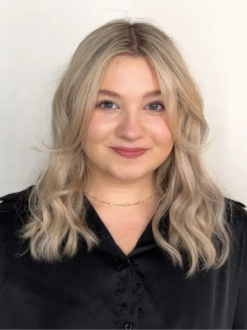
Madison-Jade Bishop
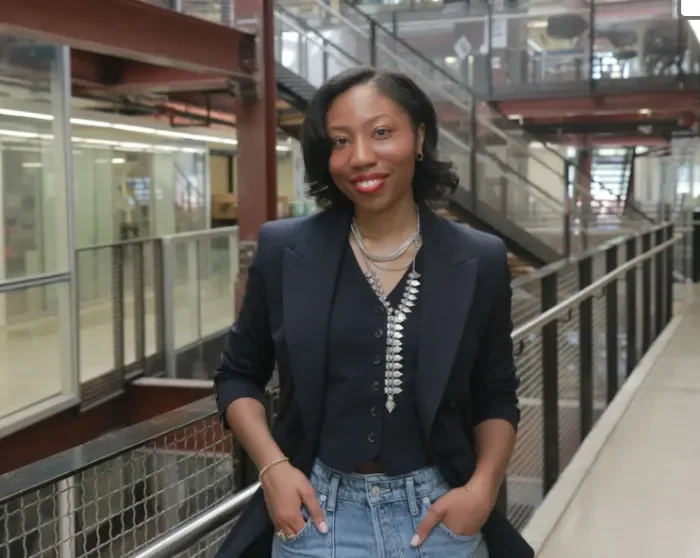
Photo: Courtesy of FSF
Madison-Jade Bishop, a senior fashion merchandising student at Drexel University, took a leap of faith when applying this year. One of her classes is structured around the program, so after receiving the prompt and doing further research, she decided to take a chance. "I was like, 'Okay, I definitely have to apply and at least try,'" she recalls. "You never know what will happen."
She was thrilled when she got the call that she was a finalist. "I'm so grateful and honored; I still am shocked, today," she laughs. "I truly did not think I would make it this far." But her project speaks for itself: Her idea, "Alpine Tranquility," elevates the travel experience. She proposed a collaboration between Ugg and Marriott that places select a assortment — blankets, loungewear, slippers — inside hotel rooms. As part of her proposition, Marriott Bonvoy members would also be able to redeem their points to take pieces home and shop for more products online.
Her love for snowboarding inspired her choice of Ugg as a brand partner, while her background as a competitive figure skater led her to pick Marriott — Bishop developed a fondness for hotel life after years of traveling around the country competing. "My mom and I always joke that if we could live in a hotel, we would," she shares.
It took months for the whole case study to come together. The most difficult part was keeping everything concise yet informative and visually appealing, she says. But her mom offered edits, as did professors and peers. It also helped that Bishop's Drexel class broke down each part of the case study into smaller assignments, making the process more manageable.
"It was really rewarding seeing how it all came together and the different iterations that I had and the whole process. It's another piece of work that I'll take with me for the rest of my life and add to my resume," she says. "I hope I can inspire other people to just put themselves out there, because you never know what's going to happen."
She hopes that competing in FSF will be a stepping stone in her career in merchandising. "I would love to be a chief merchandiser," she says. "As I'm about to enter the workforce, I'm looking at activewear and athleisure companies right now...Being a Scholar already puts my name out there, which is really nice. My name's floating around, so I think that will help me when it comes to interviews and connections."
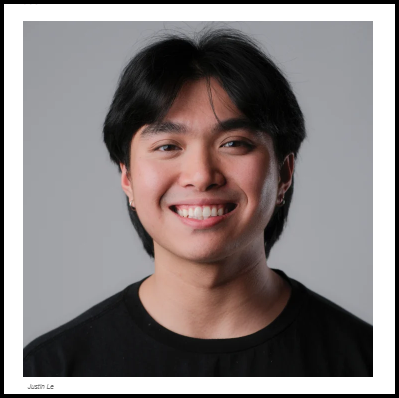
Justin Le

Photo: Courtesy of Justin Le
This was a redemption journey for Justin Le, a senior chemistry student at The University of Texas at Austin. He applied last year and made it as a Scholar, but fell short of becoming a finalist. "Last year, I was at the gala, and I was taking in everything around me," he says. "And then something in me changed. I was like, 'Oh my God, next year I have to get the finalist position.' I felt like being up on the stage and telling your story is so magical."
So when this year's application rolled around, he didn't waste a single minute in perfecting his case study. (As in, he literally submitted his project two hours before the deadline.) "I was staying up late. Everyone saw me," he laughs. "They wanted to hang out, but it took so much will for me to be like, 'I can't hang out.' And they're like, 'What are you doing?' And I'm like, 'I'm drawing.'"
His idea, "Dawg-Eared," is a collaboration between Vans and Scholastic that connects physical products to digital storytelling. His case study has two characters jump between various books, from "Charlotte's Web" to "Where the Wild Things Are," and in each world, they collect new garments along the way.
He was initially inspired by how social media discourages users from nuance. Then, while at a grocery store, he heard an ad on the PA system promoting ICE recruitment and spreading propaganda against undocumented immigrants. "At face value, people who consume this short-form content are receiving very powerful propaganda, and that did not sit well with me," he says. It was in that moment that he knew he wanted to develop a project centered around media comprehension and understanding context.
"This need for digital literacy and actually sitting with this short-form content and explaining what it means to you and what it means within its context is so, so, so important," he says.
Le didn't shy away from using his community for support this time around. "Last year, I had this mindset of, 'I can just do it myself. I don't really need to talk to anyone.' I was a little cocky," he confesses. This time around, he better utilized his mentor, asked for help from his professors and reached out to his FSF peers. As he tells it, that change in approach "turned the tables." "I really could not have done it without the community FSF has given me," he adds.
He hopes his case study (and finalist position!) proves that students don't need design or merchandise backgrounds to work in fashion. "I feel like I can set that pathway for people to realize fashion is so interdisciplinary," Le says. "It's so rewarding to get to share that story of being non-traditional in a sense, and letting people know that it's okay to be a polymath."
Rylee Funfsinn
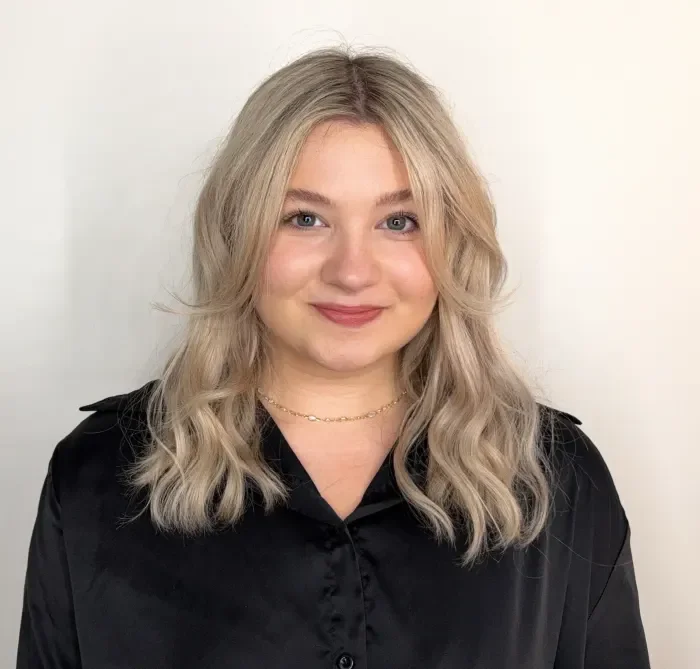
Photo: Courtesy of FSF
When Rylee Funfsinn, a fourth-year Business of Beauty and Fragrance major at Savannah College of Art & Design (SCAD), got the call that she was a 2026 FSF finalist, she remembers crying on the phone with her mom. "I've never really had an experience like this, of winning something at this caliber," she reflects.
What she knew was that she found this year's theme, "cross-industry collaboration," extremely interesting, and thought it'd be a great opportunity to participate. Her proposal, "Bye Bye Jetlag," partners skin-care brand Mario Badescu with Norse Atlantic Airways to offer co-branded skin-care amenity kits to premium-seat passengers on low-cost international flights. "I fell down this rabbit hole of looking at luxury airlines and I noticed a pattern of luxury airlines partnering with luxury beauty brands," she says of her starting point. She failed to find current luxury airlines without preexisting beauty partnerships. So she pivoted her search to budget airlines.
"Mario Bedescu has already extended its travel retail initiatives by partnering with duty-free stores in the airport," she says. "So I knew this was a really good brand to potentially open up to an airline opportunity." She also felt Norse Atlantic, as a relatively new airline, would be drawn to the visibility this partnership would offer.
For Funfsinn, the most challenging aspect was putting together the business strategy, including the budget and revenue streams. But with the help of her mentor and professors, it all came together in the end.
"It means literally the world to be an FSF finalist," she says. "I tend to be this shy person, and this has really given me the opportunity to break out of my shell and also break out into the industry as well. I couldn't have asked for a better experience."
While she's still figuring out her career ambitions, she's excited to use her FSF network to get started in the beauty industry. As of now, she's eyeing a career in marketing and the digital space.
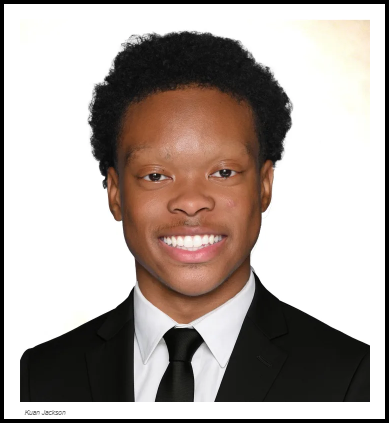
Kuan Jackson
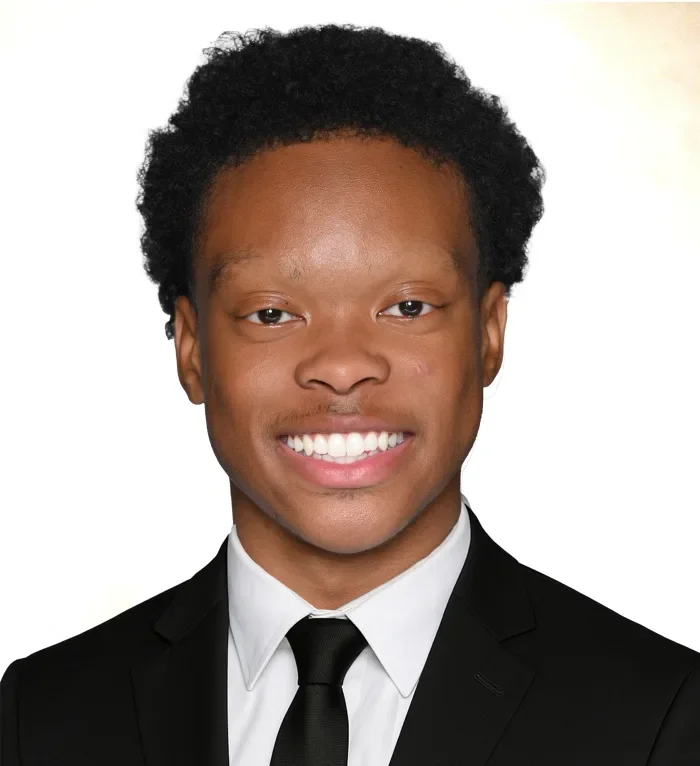
Photo: Courtesy of FSF
For Kuan Jackson, a junior at Clark Atlanta University majoring in Fashion Design and Merchandising, participating in FSF has been "a very spiritual experience," he says. "I found a way for the Fashion Scholarship Fund to align with my purpose."
That purpose? Leading with authenticity and voicing the importance of collaboration. "You cannot be your best self by yourself," he says. Perhaps that's why he leaned on his mom, other loved ones and professors when developing his case study. But he also knows the importance of trusting his gut. It's what led him to his concept, "Build Your World." His proposal features a partnership between Lego and KidSuper, where users can enter an interactive digital portal and submit original designs before any product moves to market.
"I asked myself, 'Okay, what is a company or founder that I look up to that I would be willing to work under?'" he says of his inspiration. "I don't even need a job with this person. I just want to learn and be a sponge. For me, the answer was Colm Dillane, founder of KidSuper."
Determining the other brand partner (Lego) took some time. He asked himself, "'What collaboration can I put in front of his face?'" he says. "I slam it on the table and he's like, 'Wow, I didn't know I needed this until Kuan put it in my face.' That one question solidified the energy and standard of what I was going to create."
He used the entire entry period (February to October) to work on his project, including pulling an all-nighter or two. But the long days and sleepless nights were a sacrifice he would do all over again. He says he didn't see any part of the process as a challenge. Instead, "I see everything as an opportunity to better myself, to grow, to become the person that I know I'm supposed to be," he shares.
For him, being an FSF finalist is a milestone that affirms that he's on the right path and can accomplish anything he puts his mind to. "It means legacy. It means purpose," he says. "It means building a foundation for not only myself, but for those who stand on my shoulders today."
Competing for the FSF’s top honors and the prestigious $25,000 Chairman’s Award at the FSF Live Gala requires students to tackle real-world industry challenges through comprehensive case studies. Whether their discipline is design, merchandising, or marketing, each scholar must present innovative solutions that address the current and future landscape of fashion. The Fashion Scholarship Fund acts as a crucial bridge between the classroom and the professional world, equipping these finalists with invaluable industry mentorship, networking opportunities, and the platform needed to showcase their transformative ideas.
Read the full article on Fashionista to explore
their individual case studies and insights.
By keeping doors open and standards high, the Fashion Scholarship Fund is proving that when young talent is given the right structural support and energetic backing, they will inevitably rise to meet the occasion. These four finalists are a testament to what happens when you pair brilliant, forward-thinking strategy with an authentic desire to create meaningful change.
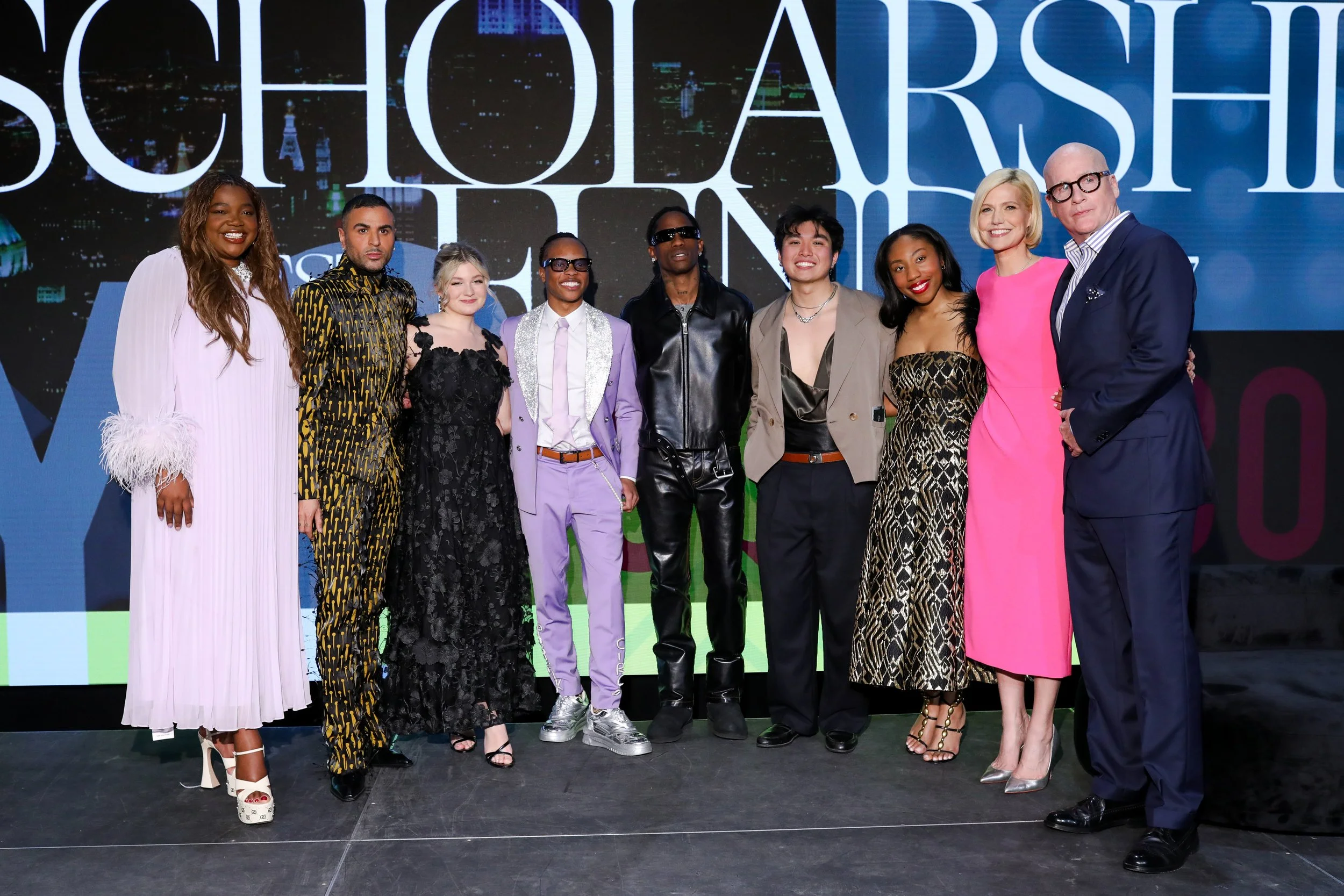
As Fashionista makes clear, the journey to becoming a Fashion Scholarship Fund finalist is about far more than academic achievement alone; it is a reflection of vision, discipline, and the courage to imagine what fashion can become next. Through their stories, this feature offers a compelling look at the next generation of talent rising through the industry with purpose and promise.